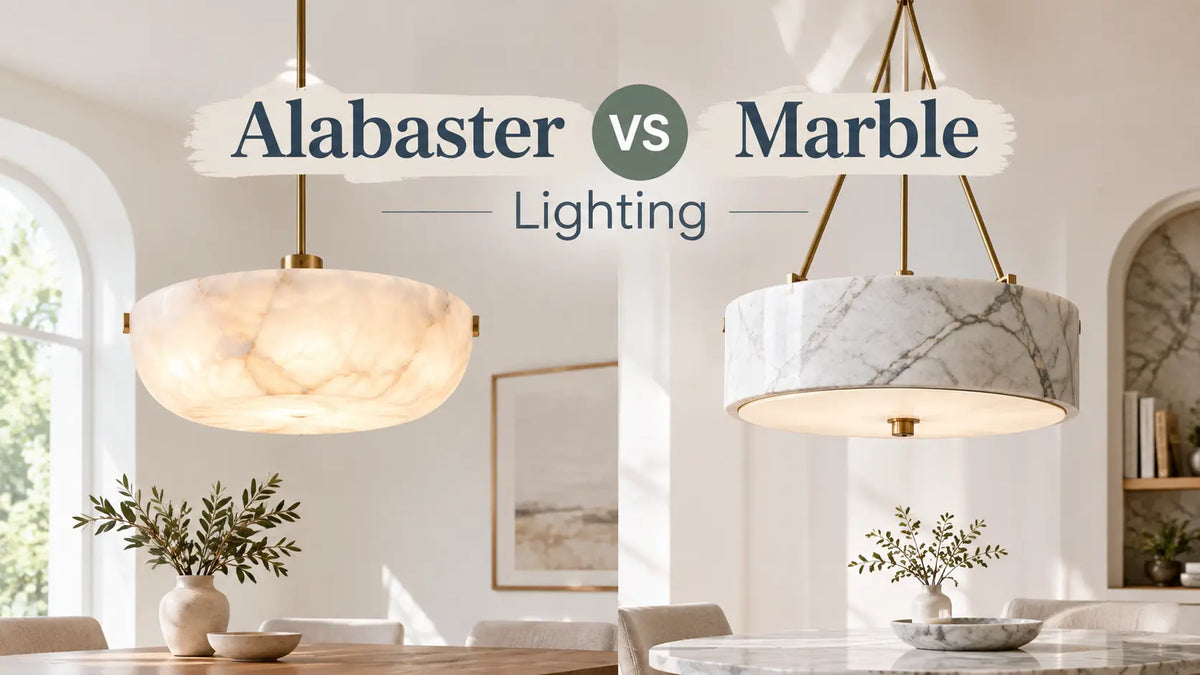
Shopping for stone lighting usually starts with one question: should it be alabaster or marble? Both bring a natural, high-end look to a room, but they behave very differently once the light is switched on.
An alabaster vs marble lighting comparison comes down to how each one glows, how much it weighs, how it holds up over the years, and what it costs to bring home. This guide walks through each of those differences and ends with a few pointers to help you decide which stone fits your space.
Is Alabaster Lighting the Same as Marble Lighting?
No, alabaster lighting and marble lighting are made from two different stones that form differently and react differently to light.
- Alabaster: light can pass through it, so it's usually carved into shades and pendant covers that glow from within.
- Marble: light can't pass through it, so it's usually shaped into a lamp base or another solid piece instead.
So they aren't the same fixture. But plenty of buyers still mix them up, especially when browsing listings that show both materials side by side or use the two names loosely. If you're unsure which stone a fixture is actually made from, it's worth asking the seller directly or checking for a closer look at how the piece handles light before buying.

Alabaster vs Marble Lighting: Key Differences
Now that you know the two aren't interchangeable, here's how that plays out in the things that actually affect your buying decision, from how the fixture lights up a room to what it costs you.
| Alabaster | Marble | |
|---|---|---|
| Light transmission | 60-85% | 0-10% |
| Typical use in a fixture | Shades, pendant covers | Bases, solid decorative pieces |
| Durability | Soft, can scratch or chip | Tougher, handles daily bumps well |
| Weight | Light, easy to install | Heavy, may need reinforced mounting |
| Price | Generally more affordable | Generally more expensive |
| Care | Dry cloth, keep away from water | Damp cloth fine, seal occasionally |
Light and Glow
Alabaster is one of the better natural materials for lighting because of how it handles a bulb's glow. A carved alabaster shade typically lets 60 to 85 percent of light through, so it comes out soft and warm, closer to candlelight than a direct bulb glow. That's why it's a popular choice for bedside lamps and ambient fixtures.
Marble, by contrast, blocks almost all light, letting through somewhere around 0 to 10 percent depending on thickness. A marble lamp base doesn't glow at all. Any light you see comes from an exposed bulb or shade sitting on top of it, not from the stone itself.
Typical Uses
The two stones end up in different parts of a fixture. You'll see alabaster carved into chandeliers, pendants, and other shades that spread light across a room.

Marble usually ends up as the base instead, like a table lamp stand or the solid foot of a floor lamp, where its weight and pattern do the talking instead of its glow.
Marble pendants and shades do exist, but real ones cost a lot more, since cutting marble thin enough to let light through is much harder than shaping it into a base. A lot of "marble" shades on the market are actually resin or composite made to look like marble, so it's worth confirming the material before paying a premium for one.
Durability and Everyday Wear
When it comes to durability, alabaster and marble don't hold up the same way. Alabaster is soft, so it can scratch or chip if it gets knocked against something hard, and it can also absorb moisture if it's wiped with a wet cloth too often.
Marble is much tougher and handles daily bumps better, though it's not indestructible either. It can still stain if liquid sits on an unsealed surface, and its shine can fade over time in direct sun.

In short, alabaster needs a bit more care about where it's placed, while marble can take more handling before it shows wear.
Weight and Installation
This is where a lot of buyers get caught off guard. Alabaster lighting installation is usually easy because the stone is light for its size, so standard ceiling hardware can hold it without any extra work.
Marble is a different story. A solid marble pendant or a heavy table lamp base can weigh several times more than an alabaster piece the same size, so you may need a stronger ceiling mount or a sturdier table before it goes up.
It's worth checking the listed weight of a marble fixture before deciding where it's going.
Price Range
Alabaster lighting price typically runs lower than marble lighting price for a similar size and style, mainly because alabaster is easier to carve and easier to find in larger pieces.
Marble costs more because it takes more work to cut and polish a harder stone, and prices go up even more for rare varieties with distinctive veining.
If an alabaster or marble fixture seems unusually cheap, it's worth a second look. Resin or composite imitations are common, and they don't behave the same way as the real thing.
Care and Maintenance
When it needs cleaning, alabaster does best with a dry, soft cloth, kept away from water since it can absorb moisture and spills.
Marble is fine with a damp cloth, but it helps to seal it now and then to resist staining, especially if it sits somewhere near drinks or oils.
Neither one is high maintenance. A little regular care goes a long way toward keeping either stone looking good for years.
How to Choose the Right Stone Lighting for Your Space
With those differences in mind, the choice usually comes down to what you want the fixture to do in the room.
When to Choose Alabaster Lighting
- You want soft, ambient light for a bedroom, reading nook, or living room corner
- You like the warm, candlelight-like glow an alabaster shade or pendant gives off
- The fixture is going in a quieter space where it's less likely to get knocked around
- You'd rather keep the budget lower without giving up a natural stone look
When to Choose Marble Lighting
- You want a statement piece that anchors a console table or entryway with its pattern and weight rather than its glow
- A marble base paired with a simple shade fits the look you're after
- The fixture is going in a higher-traffic room, like an entryway or a kid's play space, where it needs to tolerate bumps
- Your budget allows for the higher price point that comes with a harder stone to cut and polish
The Bottom Line
Alabaster and marble lighting look similar at a glance, but they do different jobs.
Go with alabaster when the glow matters most. It's lighter, easier to install, and usually more affordable. Go with marble when you want a tough, sculptural piece that makes a statement even when it's turned off.
Neither one is a wrong choice. It just depends on whether you're shopping for light or for form.
FAQ
Is alabaster lighting fragile?
Alabaster lighting is softer than most stone lighting, so it can chip or scratch if it's bumped against something hard. It's not as fragile as glass, but it's worth placing an alabaster fixture somewhere it won't be knocked around, especially in high-traffic areas or homes with young kids.
Can alabaster lighting be used in a bathroom?
It's generally not a great idea. Alabaster absorbs moisture, so a humid bathroom can lead to staining, clouding, or surface damage over time. A sealed or treated piece might hold up better, but a marble or glass fixture is usually the safer choice for bathroom lighting.
How do I know if my marble fixture is real marble?
Real marble feels cool to the touch and stays cool longer than plastic or resin imitations, which warm up fast. It also feels heavier for its size, and the veining tends to look irregular instead of printed or repeated in a pattern.
Is alabaster or marble more expensive for lighting?
Marble lighting usually costs more than alabaster lighting of a similar size, mostly because it takes more work to cut and polish a harder stone. Rare marble varieties with distinctive veining push the price even higher, while alabaster stays more affordable across most styles.
Is alabaster good for lighting?
Yes, alabaster is one of the better natural stones for lighting because light can pass through it. That gives off a soft, warm glow similar to candlelight, which is why it's a common pick for shades, pendants, and other fixtures meant to glow from within instead of just sitting on a surface.
How does alabaster vs marble durability compare?
Marble is the tougher of the two. It resists everyday bumps and scratches better than alabaster, which is soft enough to chip if it's knocked against something hard. Alabaster also absorbs moisture more easily, so it needs a bit more care in where it's placed.